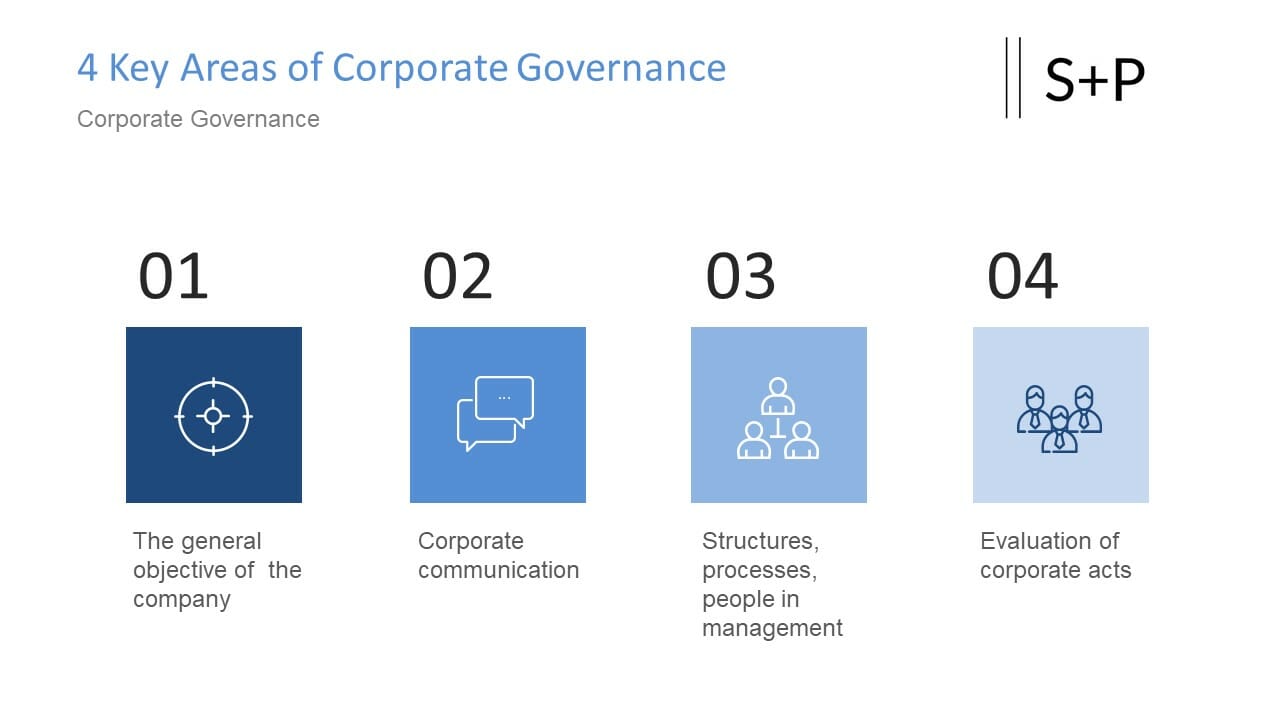
New EBA requirements for the MLRO: The European Banking Authority (EBA) has launched a public consultation on new guidelines on the role, tasks and responsibilities of Anti-Money Laundering and Countering the Financing of Terrorism (AML/CFT) Officers. The guidelines contain provisions on broader AML/CFT governance, including at group level. Once adopted, these guidelines will apply to all financial sector actors falling within the scope of the AML Directive. This consultation will run until 2 November 2021.
#1 New EBA requirements for the MLRO
The draft guidelines comprehensively address the entire AML/CFT governance regime for the first time at EU level. They set clear expectations on the role, tasks and responsibilities of the AML/CFT compliance officer and the management body and how they interact, including at group level. AML/CFT compliance officers must have sufficient seniority. This means that they are empowered to propose, on their own initiative, any necessary or appropriate measures to the management body in its supervisory and management function to ensure compliance with and effectiveness of internal anti-money laundering and counter-terrorist financing measures.
#2 Rights and duties of the MLRO
Para 24. The AML/CFT Officer referred to in Article 8(4)(a) of Directive (EU) 2015/849 should be appointed at a level that includes the power to propose, on his or her own initiative, any necessary or appropriate measures to ensure compliance with and effectiveness of the internal anti-money laundering and counter-terrorist financing measures function.
Para 25. Where the management body appoints an AML/CFT officer in accordance with paragraph 16, the management body should decide, taking into account the size and complexity of the business and its ML/TF risk,
# whether the AML/CFT compliance officer role is to be performed on a full-time basis, or
# whether this role can be performed by an employee or manager in addition to his/her existing functions within the financial services provider.
Such a decision should be based on the principle of proportionality, taking into account, inter alia, the factors set out below.
Point 26: Where the tasks of the anti-money laundering and counter-terrorist financing compliance officer are to be assigned to an employee who already has other tasks or functions within the financial services provider, the management body should consider possible conflicts of interest and take the necessary measures to avoid them. The management body should ensure that this person can devote sufficient time to the tasks of the AML/CFT officer.
Para 27. The AML/CFT compliance officer should normally work in the country of establishment of the financial services provider.
country of establishment of the financial services provider.
Point 28. In some cases, where it is appropriate to the ML/TF risk of the financial services provider and permitted under national law, the AML/CFT officer may be
be located in another country. In such cases, management should appoint the AML/CFT compliance officer under the financial services provider’s governance arrangements.
The financial undertaking should have the necessary systems and controls in place to ensure that the AML/CFT officer has the necessary knowledge of local anti-money laundering and counter-terrorist financing laws and regulations and can perform his or her duties in an equally effective and independent manner.
The financial undertaking should ensure that the AML/CFT compliance officer has access to all internal documents and systems necessary for the performance of his or her duties.
Point 29. The AML/CFT Officer should be able to delegate his duties to other employees acting under his direction and supervision. This delegation is subject to the condition that the ultimate responsibility for the effective performance of these tasks remains with the AML/CFT Officer.
Point 30. In order to ensure the independence of the AML/CFT Officer, the new EBA requirements for the AML/CFT Officer provide for the following requirements:
(a) Notwithstanding the overall responsibility of the members of the management body for the financial undertaking, the AML/CFT Officer should not report to a person who is responsible for the management of any of the activities that the AML/CFT Compliance Officer oversees.
(b) The financial undertaking shall have procedures in place to ensure that the AML/CFT Compliance Officer has full and direct access at all times to all information necessary for the performance of his function. The decision as to what information he/she needs to have access to in this regard should be made solely by the AML/CFT Compliance Officer.
(c) The AML/CFT officer should have an independent reporting line to the management body Management body, if a management body exists in the structure of the financial services provider.
Without prejudice to the general and collective responsibility of the management body, the draft guidelines also set out the tasks and role of the board member or senior manager, where there is no board, responsible for AML/CFT as a whole, and the role of the group AML/CFT officer.
As the information reaching the management body needs to be sufficiently comprehensive to allow for informed decision-making, the new EBA requirements for the money laundering officer specify what information should be included at least in the AML/CFT officer’s activity report to the management body.
#5 Parent company to appoint MLRO at group level
Where a financial services business is part of a group, the new EBA requirements for the Money Laundering Officer provide that a group-level AML/CFT compliance officer should be appointed in the parent company to ensure the establishment and implementation of effective group-wide AML/CFT policies and procedures and to ensure that any deficiencies affecting the whole or a large part of the group are effectively addressed.
The provisions of the new EBA requirements for the Money Laundering Officer are also consistent with existing ESA guidance, in particular the revised guidelines on internal governance under the Capital Requirements Directive (CRD), the revised joint ESMA-EBA guidelines on the assessment of the suitability of members of the management body, the draft guidelines on the authorisation of credit institutions and the draft guidelines on common procedures and methodologies for the supervisory review and evaluation process (SREP) and supervisory stress testing.
Tasks and duties of the Business Continuity Manager. From the ICT Guidelines, requirements for emergency management are implemented in the newly formulated section AT 7.3. Risk analyses must first be carried out for all time-critical activities and processes identified in an impact analysis. The emergency concept must show which substitute solutions are available in a timely manner in the event of an emergency and how a return to normal operation is to proceed. An overview of all activities and processes (e.g. in the form of a process map) serves as a basis for this. The effectiveness and appropriateness of the emergency concept must be reviewed regularly.
With the course Tasks and Duties of the Business Continuity Manager, you will learn the following professional skills for a secure implementation of MaRisk and BAIT:
#1 Tasks and duties of the business continuity manager
#2 Business impact analyses and risk impact analyses
#3 Ongoing monitoring duties of the business continuity manager
Tasks and duties of the Business Continuity Manager
# Target group for the seminar Tasks and Duties of the Business Continuity Manager:
# Board members and managing directors at banks, financial service providers, investment and fund companies, leasing and factoring companies
# Managers and specialists from the areas of emergency management, outsourcing management, IT compliance, compliance officers and internal audit.
Your benefits with the Business Continuity Manager course:
#1 Tasks and duties of the Business Continuity Manager
#2 Business impact analyses and risk impact analyses
#3 Ongoing monitoring duties of the Business Continuity Manager
Get a head start with the Business Continuity Manager course:
Each participant receives the S+P Tool Box with the course:
+ Guidelines for BCM (approx. 30 pages)
+ Sample reporting for Business Continuity Managers
+ S+P Tool Risk Impact Analysis for more audit security
#1 Tasks and duties of the Business Continuity Manager
MaRisk AT 7.3: The significantly expanded range of tasks of BCM:
o Objectives for emergency management and derivation of an emergency management process
o Emergency concept for time-critical activities and processes
o Determination of suitable measures for damage reduction
New reporting obligations: at least quarterly reporting on the status of emergency management
Emergency concept with business continuation and recovery plans
Interface outsourcing: outsourcers and insourcers must have coordinated contingency concepts.
#2 Business Impact Analyses and Risk Impact Analyses
More stringent requirements for business impact analyses:
o Impact on activities and processes
o Type and extent of (im-)material damage
o Timing of the failure.
Risk impact analyses for the identified time-critical activities and processes:
o Identify and assess potential hazards.
o Carrying out qualitatively tightened risk analysis on the basis of uniform scoring criteria
Consideration of emergency scenarios
o (Partial) failure of a site (e.g. due to flood, major fire, area closure, access control failure)
o Significant failure of IT systems or communication infrastructure
o Loss of a critical number of employees
o Failure of service providers (e.g. suppliers, electricity providers)
#3 Ongoing monitoring obligations of the business continuity manager
MaRisk + BAIT: Requirements for monitoring and control activities
Benchmarks for monitoring and control activities and their implementation
Audit-proof assessment of impact and risk analyses
o The effectiveness and appropriateness of the emergency concept must be reviewed regularly.
o For time-critical activities and processes, the relevant scenarios must be demonstrated at least annually and on an ad hoc basis.
Reviews of the emergency concept shall be recorded.
o Results shall be analysed with regard to necessary improvements.
o The results are to be communicated in writing to the respective persons responsible.
This could also be of interest to you as a business continuity manager
MaRisk 6.0: Stricter requirements for emergency management. From the ICT Guidelines, requirements for emergency management are implemented in the newly formulated section AT 7.3.
Risk analyses must first be carried out for all time-critical activities and processes identified within the scope of an impact analysis to be carried out. The emergency concept must show which substitute solutions are available in a timely manner in the event of an emergency and how a return to normal operation is to proceed.
An overview of all activities and processes (e.g. in the form of a process map) serves as a basis for this. The effectiveness and adequacy of the emergency concept must be reviewed regularly.
#1 MaRisk 6.0: Stricter requirements for emergency management
Chapter AT 7.3 Emergency management has now been worded as follows:
The institution shall define objectives for emergency management and, derived from this, establish an emergency management process. Precautions must be taken for emergencies in time-critical activities and processes (emergency concept). The measures defined in the emergency concept must be suitable for reducing the extent of possible damage. The emergency concept must be updated as required, reviewed annually to ensure that it is up to date and communicated appropriately. The management must receive written reports on the status of the emergency management at least quarterly and on an ad hoc basis.
The contingency plan must include business continuity and recovery plans. Business continuity plans must ensure that substitute solutions are available promptly in the event of an emergency. Recovery plans shall allow for a return to normal operations within a reasonable period of time. Adequate internal and external communication must be ensured in the event of emergencies. In the case of outsourcing of time-critical activities and processes, the outsourcing institution and the outsourcing company shall have coordinated contingency plans.
The effectiveness and appropriateness of the emergency concept shall be reviewed regularly. For time-critical activities and processes, it shall be demonstrated for all relevant scenarios at least annually and on an ad hoc basis. Reviews of the emergency concept shall be recorded. Results shall be analysed with regard to necessary improvements. Risks shall be managed appropriately. The results are to be communicated in writing to the respective persons responsible.
MaRisk provides the following explanations on the stricter requirements for emergency management.
#2 Time-critical activities and processes
Time-critical activities and processes are those which, if impaired for a defined period of time, are expected to cause unacceptable damage to the institution.
In order to identify time-critical activities and processes as well as supporting activities and processes, IT systems and other resources required for this purpose as well as potential threats, the Institute conducts impact analyses and risk analyses. An overview of all activities and processes (e.g. in the form of a process map) serves as a basis for this.
In business impact analyses, the consequences that an impairment of activities and processes can have for business operations are considered over graduated periods of time. The impact analyses should consider the following aspects, among others:
– Nature and extent of the (im)material damage.
– Impact of the timing of the failure on the damage (e.g. failure of payment transactions during peak business hours).
#4 Risk Analyses – Tasks and Duties of the Business Continuity Manager
In risk analyses (risk impact analyses) for the identified time-critical activities and processes, potential hazards are identified and evaluated which could cause an impairment of the time-critical business processes.
#5 Emergency concept – tasks and duties of the business continuity manager
In the emergency concept, responsibilities, objectives and measures for the continuation or recovery of time-critical activities and processes are determined and criteria for the classification as well as for the triggering of the plans are defined.
At least the following scenarios are taken into account:
– (Partial) failure of a location (e.g. due to flood, major fire, area closure,failure of access control).
– Significant failure of IT systems or communication infrastructure (e.g. due to errors or attacks)
– Loss of a critical number of employees (e.g. pandemic, food poisoning, strike)
– Failure of service providers (e.g. suppliers, electricity providers)
The frequency and scope of the reviews should generally be based on the hazard situation. Service providers should be involved appropriately. Reviews include, among other things:
– Testing of technical precautionary measures
– communication, crisis management and alerting exercises
– Emergency or full-scale exercises.
#8 What implementation deadlines apply to the New MaRisk 6.0?
The new version of MaRisk comes into force upon publication. There is a transition period until 31.12.2021.
This applies to the documentation requirement related to the outsourcing register in AT 9 para. 14 MaRisk only insofar as the obligation to maintain an outsourcing register also applies as of 01.01.2022 when the FISG comes into force.
Otherwise, the first date of application for the specification of this requirement in MaRisk is also based on the law.
Different implementation deadlines apply to the adjustment of outsourcing agreements that already exist or are being negotiated.
A separate implementation period until 31 December 2022 is granted for this.
An adjustment of contractual relationships concluded on the basis of a public procurement procedure can be omitted due to the special legal problems insofar as these contracts are limited in time and must be re-awarded within the next five years. BaFin assumes that the new requirements will already be sufficiently taken into account in award procedures initiated from 01.01.2022.
Institutions with a high NPL portfolio must already comply with the requirements of the NPE Guidelines immediately after the end of the transition period on 31 December 2021, provided that these institutions have an NPL ratio greater than 5% on the two preceding quarterly reporting dates (30 September 2021 and 31 December 2021).
The first quarterly reporting date relevant for the classification as an institution with a high NPL ratio is therefore 30.09.2021.
Participants have also booked the following courses MaRisk + SREP + Depot A:
What are the tasks of the compliance function? The identification of the essential legal regulations and requirements, the non-compliance with which can lead to a risk to the assets of the institute, is carried out by the compliance function at regular intervals, taking risk aspects into account.
The compliance function shall work towards the implementation of effective procedures for compliance with the legal regulations and requirements essential for the institution and corresponding controls.
Furthermore, the compliance function shall support and advise the management with regard to compliance with these legal regulations and requirements.
#1 What are the tasks of the compliance function?
In principle, the compliance function reports directly to the Executive Board. It can also be linked to other control units, provided there is a direct reporting line to the management.
In order to fulfil its tasks, the compliance function may also have recourse to other functions and units.
Depending on the size of the institution as well as the type, scope, complexity and risk content of the business activities, the compliance function is to be located in an area independent of the market and trading divisions.
Book the seminar What rights does the compliance officer have? online. Convenient and easy with the seminar form online and product no. A01.
#2 Target group for the course: What rights does the compliance officer have?
# Board members and managing directors at banks, financial service providers, insurance companies, leasing and factoring companies
# Compliance officers and employees of compliance and legal departments, heads of internal audit, data protection officers,
# One unit §25h (7) German Banking Act, legal advisors, compliance specialists and managers
#3 Your benefits with the course: What rights does the compliance officer have?
#1 Practical implementation of a compliance system – new duties of care and liability risks for the compliance function – whistle-blowing system according to §25 of the German Banking Act (KWG)
#2 Compliance interfaces with data protection, the one unit §25(7) German Banking Act and internal auditing
#3 Minimum requirements for an overall ICS with compliance, corporate governance, data protection, internal audit and the central office
#4 Your advantage with the course: What rights does the compliance officer have?
Each participant receives the following S+P Tool Box free of charge with the seminar What rights does the compliance officer have?
+ Compliance and Corporate Governance Organisational Handbook (incl. EBA requirements, 40 pages)
+ S+P Check: Data protection for practitioners in accordance with EU-DSGVO
+ Checklist: Monitoring and documentation of control actions
+ Sample report for the reporting of guarantors and authorised representatives
+ S+P Tool Legal Inventory: Risk Assessment for Compliance Officers
Programme for the course: What rights does the compliance officer have?
Agile Compliance Management in Practice
Requirements of MaRisk and European banking supervision for a compliance system
MaRisk-compliant organisation and staffing of the compliance function
Guarantor position under liability law – BGH rulings on the responsibility of agents
„Red Flags“: Limiting Personal Liability Risks for the Compliance Function
Minimum requirements for a whistle-blowing system
Compliance reporting: monitoring and control plan, sample for audit-proof reporting
Each participant receives the following S+P Tool Box free of charge with the seminar What rights does the compliance officer have?
+ Organisational manual Compliance and Corporate Governance (incl. EBA requirements, length: approx. 40 pages).
Manage compliance interfaces to DPO, CISO, MLRO, outsourcing officer and internal audit securely.
The Three Lines of Defence Model:
Compliance and Internal Audit Interface
Risk-oriented auditing, documentation and reporting by the commissioners
IT compliance: Supervisory requirements for IT and the CISO
Data protection compliance: rights and duties of the data protection officer – optimally designing interfaces between compliance, IPM and data protection
Each participant receives the following S+P Tool Box free of charge with seminar What are the rights of the compliance officer?
+ Checklist: Data Protection for Practitioners acc. to DSGVO
+ Checklist: Monitoring and documentation of control actions
MaRisk AT 4.4.2: Tasks and Duties of the Compliance Officer
ICS significance for a proper business organisation §25a German Banking Act
MaRisk AT 8: What must the compliance officer pay attention to in adjustment processes?
Managing compliance-relevant risks securely with ICS key controls:
Remuneration Directive: Control and approval duties of compliance officers on remuneration policy
Avoiding legal risks: integrated risk analysis for an audit-proof legal inventory
Avoiding duplication of work – clearly assigning interfaces and tasks
Self Assessment § 25d German Banking Act: Are Executive Board and Supervisory Board Compliant?
Each participant receives the following S+P Tool Box free of charge with the seminar:
+ S+P Check: Compliance of the business organisation §25 KWG
+ Sample instructions for setting up an audit-proof ICS system (approx. 50 pages)
+ S+P Tool Legal Inventory: Risk Assessment for Compliance Officers
+ S+P Check: InstitutsVergV – Control duties of the compliance officer
Participants have also booked the following Compliance courses:
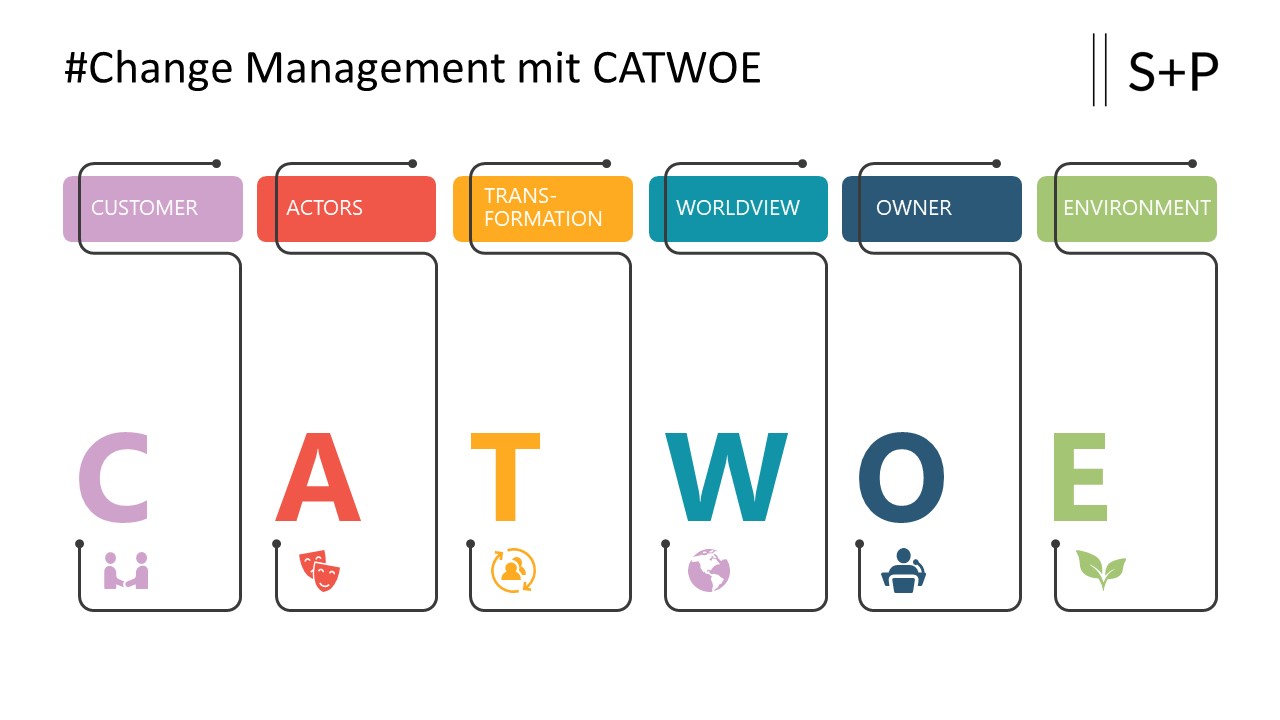
Was ist die CATWOE Technik? CATWOE steht für Customer – Actors – Transformation Process – World View – Owners – Environmental Constraints. Die CATWOE-Analyse ist eine Technik für effiziente Problemlösungen. Mit CATWOE analysierst du dein Unternehmen (Gesamtbild) und definierst deine Strategie für den Change. Indem du das Problem aus sechs entscheidenden Perspektiven angehest, kannst du sehr effektive eine Gesamtlösung vorbereiten.
CATWOE steht für
#Customer
#Actors
#Transformations Process
#World View
#Owners
#Environmental Constraints.
#Was ist die CATWOE Technik?
Mit der Arbeitswelt 4.0 kommen neue Herausforderungen auf Geschäftsführer und Führungskräfte zu. Bist du fit für den digitalen Wandel? Benötigt dein Unternehmen einen Change? Mit dem Seminar Change Management erhältst du die wichtigsten Kenntnisse und Tools an die Hand um mit deinem Unternehmen und deinem Team Change-Projekte erfolgreich umzusetzen:
Tag 1
Grundlagen des agilen Managements
Sichere Umsetzung von Change-Projekten als Führungskraft
Was ist die CATWOE Technik?
Überzeugend Führen im digitalen Wandel
Tag 2
Teams erfolgreich durch Veränderungsprozesse führen
Agiles Projektmanagement mit Scrum & Co.
Vom Change zum Innovationsmanagement
Seminar Change Management online buchen. Bequem und einfach mit der Produkt-Nr. B17: Seminarformular online.
Dein Nutzen mit dem Seminar Change Management
Tag 1
Grundlagen des agilen Managements
Sichere Umsetzung von Change-Projekten als Führungskraft
Überzeugend Führen im digitalen Wandel
Tag 2
Teams erfolgreich durch Veränderungsprozesse führen
Agiles Projektmanagement mit Scrum & Co.
Vom Change zum Innovationsmanagement
Zielgruppe für das Seminar Change Management
Geschäftsführer, Prokuristen und Führungskräfte
Teamleiter, die im Vertrieb, Einkauf, HR Management oder im Controlling tätig sind.
Dein Vorsprung mit dem Seminar Change Management
Die Teilnehmer erhalten für ihren Sprint die S+P Tool Box:
+ S+P Test: Benötigt dein Unternehmen einen Change?+ S+P Test Digitaler Wandel: Wie professionell managst du Veränderungen?
+ Was ist die CATWOE Technik?+ S+P Leitfaden: Instrumente für den agilen Sprint+ S+P Test: Wie gut beherrschst du die Moderationstechniken?+ S+P Leitfaden: Agile Methoden für Change Management
Seminarprogramm Tag 1: Seminar Change Management
Grundlagen des agilen Managements
Welche Kultur benötigt ein schlankes Unternehmen?
Die wichtigsten Erfolgstreiber im Lean Management
Toyota-Produktionssystem – Lessons Learned für die eigene Branche
Verzögerungskosten (Cost of Delay) gezielt identifizieren und reduzieren
Aufgaben des Managements: Dynamik im Unternehmen managen
Die Lean-Falle und wie du ihr ausweichst
Die Teilnehmer erhalten die S+P Tool Box:+ S+P Test: Benötigt dein Unternehmen einen Change?
Sichere Umsetzung von Change-Projekten als Führungskraft
Was bedeutet Agilität für die Zusammenarbeit und Prozesse im Unternehmen?
Was ist die CATWOE Technik?
Führungsaufgabe Agilität – so kommunizierst du den digitalen Wandel im Unternehmen
„Spielregeln‘‘ und Kommunikationswege im Team klar definieren
Mit Zielen führen und Ziele agil formulieren
Teammitglieder „mit ins Boot holen‘‘ – Agilität zur gemeinsamen Sache machen
Die Teilnehmer erhalten mit dem Seminar Change Management die S+P Tool Box:+ S+P Test Digitaler Wandel: Wie professionell managst du Veränderungen?+ S+P Leitfaden: Instrumente für den agilen Sprint
Überzeugend Führen im digitalen Wandel
Das Unternehmen verändern – Aufbau einer Innovationskultur
Wie kommuniziere ich schwierige Themen und Kritik?
Einbettung im Gesamtchange – Schnittstellenbetrachtung
Rollen im Change-Projekt festlegen
Flexibler Umgang mit Veränderungen im Team
Flow schaffen und ein Pull-System etablieren
Die Teilnehmer erhalten mit dem Seminar Change Management die S+P Tool Box:+ S+P Leitfaden: Agile Methoden für Change Management
Seminarprogramm Tag 2: Seminar New Work und Change Management
Teams erfolgreich durch Veränderungsprozesse führen
Wie funktionieren agile Teams?
Mehr Flexibilität im Tagesgeschäft – Einsatz von agilen Techniken
Der Mix macht´s: Kombination agiler Techniken
Das Miteinander in agilen Teams
Projektmanager und Scrum Master als Team-Coaches
Wie Führung helfen kann Agilität zur Gewohnheit zu machen
Teams im Veränderungsprozess richtig führen
Die Teilnehmer erhalten die S+P Tool Box:+ S+P Leitfaden: Agile Methoden für Change Management
Agiles Projektmanagement mit Scrum & Co.
Wie agiles Projektmanagement funktioniert
Was ist Scrum und wie kann es eingesetzt werden?
Projektanforderungen im Griff: Use Cases, Burn-Down-Charts & Co.
Projektmanager und Scrum Master als Team-Coaches
Mit der teamzentrierten Arbeitsweise zum Erfolg
Die Teilnehmer erhalten mit dem Seminar Change Management die S+P Tool Box:+ S+P Test: Wie gut beherrschst du die Moderationstechniken?
Innovationsmanagement mit Sprint & Co.
Wie funktioniert der Google Design Sprint?
Montag: Erstelle deinen Routenplan
Dienstag: Neu kombinieren und verbessern
Mittwoch: Rumble – zwei mögliche Alternativen im Test
Donnerstag: Wie du deinen Prototypen erstellst
Freitag: Persönliches Gespräch an Stelle von Big Data
Die Teilnehmer erhalten die S+P Tool Box:+ S+P Leitfaden: Instrumente für den Google-Sprint
Mehr Innovationen mit No-Code-Tools. Technologie folgt oft einer bekannten Entwicklung. Zuerst wird sie von einem kleinen Kern von Wissenschaftlern genutzt, dann erweitert sich der Kreis bis die Technologie schließlich so benutzerfreundlich gemacht wird, dass fast jeder sie nutzen kann.
Im Moment macht der Prozess der Softwareentwicklung diesen letzten Sprung. Neue „No-Code“-Plattformen ersetzen die Programmiersprache durch einfache Drag-and-Drop-Schnittstellen. Die Auswirkungen sind enorm: Wo früher ein Team von Ingenieuren nötig war, haben jetzt Benutzer die Möglichkeit, diese Idee selbst zum Leben zu erwecken. Das bedeutet, dass leistungsstarke Technologie plötzlich auch für kleine Unternehmen erschwinglich wird.
Mehr Innovationen mit No-Code-Tools + SME nützen jetzt die Vorteile der KI
Auch wird es möglich künstliche Intelligenz – eine der umwälzendsten Technologien – einzusetzen, ohne ein Heer von teuren Entwicklern einstellen zu müssen. Kleinere Unternehmen können künftig die Vorteile der KI nutzen, z. B. für neuartige Kundenerlebnisse oder zur Optimierung der Abläufe für maximale Effizienz.
#1 Arbeite mit den Daten, die du bereits hast.
Oft lässt sich daraus mehr Wert schöpfen, als du zunächst denkst. Wähle Aufgaben mit hohem Wert, bei denen eine höhere Effizienz das Wachstum fördern wird.
Scheu dich nicht, schnell weiterzumachen, wenn du mit einem KI-Projekt keinen Top-ROI erzielen kannst. Es gibt eine Vielzahl von Anwendungen mit hohem Ertrag, die einen Mehrwert bieten.
#2 No-Code-Tools ermöglichen es deinen Mitarbeitern, kreative Wege zur Nutzung von Daten zu finden.
Vertriebsteams sammeln zum Beispiel Leads aus allen möglichen Quellen – Kaltakquise, Online-Formulare oder Visitenkarten. Aber wenn ein Team erst einmal Tausende von Leads gesammelt hat, muss entschieden werden, welche Leads weiterverfolgt werden sollen. Durch das Erkennen von Mustern im Benutzerverhalten kann ein einfaches No-Code-Klassifizierungsmodell eingesetz werden. Das wäre beispielsweise Leads nach ihrer Umsatzwahrscheinlichkeit einzustufen.
Mit einer KI-Plattform ohne Code kann ein Benutzer eine Tabelle mit Daten über potenzielle Kunden in die Benutzeroberfläche ziehen und dort ablegen und einige Auswahlen aus einem Dropdown-Menü treffen.
Das Potenzial der KI ist im Unternehmen allgegenwärtig, und der Vorteil von No-Code-Plattformen ist, dass sie nicht auf einen bestimmten Anwendungsfall beschränkt sind.
Für viele Unternehmen wird es bei der Arbeit mit No-Code-Plattformen darauf ankommen, einfach das richtige Projekt zu finden.
#3 Wo man mit No-Code anfängt
Eine No-Code-Plattform muss zwei entscheidende Merkmale aufweisen.
Erstens braucht sie eine einfache Schnittstelle, die es leicht macht, Daten in den Modelltrainingsprozess einzubringen. Das bedeutet, dass sie mit den heute gängigen Geschäftssystemen, wie z. B. Salesforce, und Excel verbinden kann.
Sobald die Daten hochgeladen sind, muss die Plattform in der Lage sein, die Daten automatisch zu klassifizieren und für das Modelltraining korrekt zu kodieren – und das alles mit minimalen Eingaben des Benutzers.
Zweitens muss die Plattform die Modellauswahl und das Training automatisieren. Die Plattform sollte über einen Suchmechanismus verfügen, um das beste Modell auf der Grundlage der Daten und der erforderlichen Vorhersage zu finden.
Dieses Seminar könnte dich auch interessieren: Was ist der Motor für Innovationen in deinem Unternehmen?
Mit diesem Seminar Change Management + Innovationsmanagement lernst du folgende fachliche Skills:
Sichere Umsetzung von Change Projekten als Führungskraft
Mehr Innovationen mit No-Code-Tools
Sprung in die Zukunft mit innovativen Techniken
Entscheidungen im Wandel gut verkaufen
Das Seminar Change Management + Innovationsmanagement online buchen; bequem und einfach mit dem online Seminarformular und der Produkt Nr. P02.
Tipp: S+P Online Schulungen bringen dein Office direkt in unseren Seminarraum. S+P Online Schulungen sind interaktiv und spannend. Wähle dein passendes Online Schulungsprogramm aus! Bequem und einfach mit dem online Seminarformular.
Zielgruppe für das Seminar Change Management + Innovationsmanagement
Teamleiter, die in Vertrieb, Einkauf, Fertigung, HR Management oder im Controlling tätig sind.
Dein Vorsprung mit dem Seminar Change Management + Innovationsmanagement
Du erhältst als Teilnehmer die S+P Tool Box:
+ S+P Test Digitaler Wandel: Wie professionell managst du Veränderungen?+ S+P Leitfaden: Instrumente für deinen agilen Sprint+ S+P Leitfaden: Agile Methoden für dein Change Management+ S+P-Test: Schätze deine Kommunikationsstärken ein+ S+P Leitfaden: Erfolgreich Verhandeln in schwierigen Situationen
Seminarprogramm – Seminar Mehr Innovationen mit No-Code-Tools
Mit Change Projekten den Wandel gestalten
Was bedeutet Agilität für Zusammenarbeit und Prozesse im Unternehmen?
Führungsaufgabe Agilität – so kommunizierst du den digitalen Wandel im Unternehmen
„Spielregeln“ und Kommunikationswege im Team klar definieren
Das WHY-Prinzip: So führst du mit Zielen und entfaltest Dynamik
Wie du dein Innovations-Team zusammenstellst
Teammitglieder „mit ins Boot holen“ – Agilität zur gemeinsamen Sache machen
Sprung in die Zukunft mit innovativen Techniken
The Big Three: Google-Sprint, Scrum und Design-Thinking
10 Tools für Change-Manager: Vom Change zum Innovationsmanagement
Was ist eine Design Challenge?
Question the Question: So definierst du das Design
Erste Ideen sammeln und clustern
There is only one Boss: The Customer
Der Kunde als Zentrum der Design-Thinking-Welt
Prototypen bauen und testen
Feedbackgrid: Interaktion mit dem Kunden
Go with the Flow: Das Ideen-Drehbuch mit der HOW-NOW-WOW-Matrix
Du erhältst als Teilnehmer die S+P Tool Box:+ S+P Leitfaden: Instrumente für deinen agilen Sprint+ S+P Leitfaden: Agile Methoden für dein Change Management
Entscheidungen im Wandel gut verkaufen – Mehr Innovationen mit No-Code-Tools
Richtige Entscheidungen müssen sich nicht immer gut anfühlen: Balance zwischen Kopf- und Bauchentscheidungen
Wird der Wandel mit Konsequenz vorangetrieben? Entscheidungen durch effektive Kommunikation vermitteln
Wie gehst du mit Widerständen und Unwägbarkeiten um? Richtig argumentieren und überzeugen
Vorwürfe und Angriffe aktiv entschärfen: gemeinsamer Lernprozess im Innovationsprojekt
Du erhältst als Teilnehmer die S+P Tool Box:+ S+P-Test: Schätze deine Kommunikationsstärken ein+ S+P Leitfaden: Erfolgreich Verhandeln in schwierigen Situationen
Sie sehen gerade einen Platzhalterinhalt von Turnstile. Um auf den eigentlichen Inhalt zuzugreifen, klicken Sie auf die Schaltfläche unten. Bitte beachten Sie, dass dabei Daten an Drittanbieter weitergegeben werden.
Sie sehen gerade einen Platzhalterinhalt von Facebook. Um auf den eigentlichen Inhalt zuzugreifen, klicken Sie auf die Schaltfläche unten. Bitte beachten Sie, dass dabei Daten an Drittanbieter weitergegeben werden.
Sie sehen gerade einen Platzhalterinhalt von Instagram. Um auf den eigentlichen Inhalt zuzugreifen, klicken Sie auf die Schaltfläche unten. Bitte beachten Sie, dass dabei Daten an Drittanbieter weitergegeben werden.
Sie sehen gerade einen Platzhalterinhalt von X. Um auf den eigentlichen Inhalt zuzugreifen, klicken Sie auf die Schaltfläche unten. Bitte beachten Sie, dass dabei Daten an Drittanbieter weitergegeben werden.