Wie gibt man ein Feedback? Das Ziel des Feedbacks ist es, den Mitarbeitern zu helfen, ihre Leistung zu verbessern. Wir wollen, dass die Mitarbeiter ihre Performance verbessern. Einen wertvollen Beitrag für das Team leisten. Wir wollen, dass unser Unternehmen zu einem Workspace wird, an dem Mitarbeiter offen miteinander kommunizieren können, um sich zu entwickeln und ihre Performance zu verbessern.
In den letzten 20 Jahre haben sich viele Unternehmen um die Schaffung einer motivierenden Feedback-Kultur bemüht. Dabei wurde oftmals vergessen, warum wir das überhaupt tun. Mitarbeitern zu sagen, dass sie das Ziel verfehlen, bringt das Unternehmen nicht nach vorne. Es ist nicht dasselbe wie ihnen zu helfen, das Ziel zu erreichen.
Und was ist mit positivem Feedback, das hervorhebt, was Mitarbeiter gut gemacht haben? Es ist eigentlich nur eine andere Form der Kritik. Durch die Konzentration auf das Positive werden nicht unbedingt die Schwächen angesprochen, die einer besseren Performance im Wege stehen.
#1 Feedback: Wechsel vom Kritiker zum Verbündeten.
Jeder möchte mit einem Verbündeten sprechen. Niemand möchte mit einem Kritiker sprechen. Als Verbündeter zeigst du, dass du dich um den Mitarbeiter kümmerst, ihm vertraust und sich für ihn einsetzet.
Wie kannst du also deutlich machen, dass du ein Verbündeter und kein Kritiker bist? Beachte am Besten die folgenden drei Regeln:
Hab Mitgefühl.
Drück dein Vertrauen aus.
Bitte um Erlaubnis.
Stellen dir vor, ein Kollege hat als Teamleiter Schwierigkeiten und kommt mit einem Teammitglied nicht zurecht. Ein Gespräch mit einem „Verbündeten“ zu beginnen, kann wie folgt ablaufen: „Das klingt wirklich frustrierend. Und ich weiß, dass du damit umgehen kannst. Sollen wir die Teamsituation gemeinsam durchdenken?“
#2 Feedback: Bestimme ein motivierendes Ergebnis.
Wenn du erst einmal „Ja“ gesagt haben, ist die Versuchung groß, wieder auf das Problem – die frustrierende Vergangenheit – einzugehen. Tu das noch nicht.
Konzentriere dich stattdessen auf motivierendes Ergebnis, das du schaffen willst. „Was ist das Ergebnis, das du anstrebst?“ Erlaube deinem Kollegen zu formulieren, was er für sich selbst und für das Unternehmen erreichen will. „Ich würde gerne ein leistungsstarkes Team aufbauen, in dem wir offen kommunizieren, zusammenarbeiten und Ideen schmieden können.“
#3 Feedback: Entdecke versteckte Chancen.
Wenn du dir zusammen mit deinem Kollegen über das gewünschte Ergebnis im Klaren bist, dann kannst du das Problem wieder aufgreifen. Aber versuche es nicht zu „lösen“, sondern frage: „Wie kann uns dieses Problem helfen, das Ergebnis zu erreichen?“
Vielleicht stellst du zusammen mit deinem Kollegen fest, dass der Mitarbeiter, der als „störend“ bezeichnet wird, in Wirklichkeit der einzige im Team ist, die bereit ist, sich auf einen Konflikt einzulassen, um wichtige Themen anzusprechen.
#4 Feedback: Bewerte die Erfolgschancen.
In diesem Schritt leitest du deinen Kollegen an, wie er nun einen Aktionsplan auswählen kann und er sich verpflichtet diesen zu verwirklichen. Fordere deinen Kollegen auf eine Bewertung der Erfolgschancen für seinen Aktionsplan zu treffen: „Auf einer Skala von 1-10, wie zuversichtlich bist du, dass du diesen Plan umsetzen wirst?“
Gekonntes Feedback kann ein Instrument sein, das Menschen hilft, ihre blinden Flecken zu erkennen. So können Wachstumsmöglichkeiten freigesetzt werden.
Während der gesamten beruflichen Laufbahn wird Mitarbeitern beigebracht, sich anzupassen – an den Status quo, an die Meinungen und Verhaltensweisen anderer. Dieser Anpassungsdruck wird umso größer, je höher wir die Karriereleiter erklimmen. Der Preis, den Mitarbeiter und Unternehmen dafür zahlen, ist ein Rückgang des Engagements und der Innovationsrate.
Um erfolgreich zu sein und sich weiterzuentwickeln, müssen Unternehmen ein Gleichgewicht finden zwischen der Einhaltung formeller und informeller Regeln, die für die notwendige Struktur sorgen, und der Freiheit, die den Mitarbeitern hilft, ihre beste Arbeit zu leisten. Kill the stupid Rule ist eine Technik um zu viel Konformität aufzubrechen und Freiräume für Neues zu schaffen.
Warum ist Konformität so weit verbreitet?
Früh im Leben lernen wir, dass es greifbare Vorteile bringt, wenn wir uns an gesellschaftliche Regeln halten. Wenn wir uns anpassen, fühlen wir uns akzeptiert und als Teil der Mehrheit.
Konformität am Arbeitsplatz nimmt viele Formen an: das Verhalten anderer in ähnlichen Rollen nachahmen, angemessene Emotionen zum Ausdruck bringen, angemessene Kleidung tragen, schlechte Entscheidungen eines Teams dulden.
Und allzu oft führt das Nachgeben gegenüber dem Gruppenzwang dazu, dass der Einzelne sich weniger für seine Arbeit interessiert. Das ist verständlich: Konformität steht oft im Widerspruch zu unseren wahren Vorlieben und Überzeugungen.
Wir machen es uns zu bequem mit dem Status quo. In Organisationen spielen Standardpraktiken und die üblichen Denk- und Handlungsweisen eine entscheidende Rolle bei der Gestaltung der Leistung im Laufe der Zeit.
Sie können aber auch dazu führen, dass wir nicht weiterkommen, dass unser Engagement nachlässt und unsere Fähigkeit zur Innovation oder zur Erbringung von Spitzenleistungen beeinträchtigt wird.
Diese Konformität kannst du mit einem positiven Feedback aufbrechen. Nütze hierfür als agile Feedback-Technik Kill the stupid Rule.
Genutzt wird diese Methode im Feedback-Prozess, um lähmenden, demotivierenden, umsatzzerstörenden Ballast zu identifizieren und durch einfachere, zeitgemäßere Vorgehensweisen zu ersetzen. Dies hilft uns, unsere Prozesse und Vorgehensweisen zu hinterfragen. Damit schafft man mehr Zeit für kundenzentriertes Arbeiten und mehr Agilität bei der Arbeit.
Kill the stupid rule hilft dir mithilfe von Inputs und Feedbacks deiner Mitarbeiter Barrieren und Hindernisse in Form von Regeln zu identifizieren und wenn möglich diese zu eliminieren. Du lernst, offen und ehrlich Feedback zu geben, Bewährtes zu hinterfragen und zu verbessern.
Wie gibt man ein Feedback? Mit der Strategie Kill the stupid Rule können Führungskräften konstruktive Nonkonformität im Feedback-Prozess fördern.
#1 Gib deinen Mitarbeitern Gelegenheit, sie selbst zu sein
Ermutige deine Mitarbeiter dazu, darüber nachzudenken, was sie authentisch macht. Dies kann gleich zu Beginn des Feedback-Prozesses geschehen.
Wie gibt man ein Feedback? Gib deinen Mitarbeitern eine halbe Stunde Zeit, um darüber nachzudenken, was an ihnen einzigartig ist, was sie authentisch macht und wie sie ihr authentisches Wesen bei der Arbeit zum Ausdruck bringen können.
Als Führungskraft kannst du diese Art der Reflexion auch fördern, wenn die Mitarbeiter bereits im Unternehmen sind. Fordere deine Mitarbeiter und deine Führungskräfte auf, darüber nachzudenken, was sie einzigartig und authentisch macht und wie sie ihre Arbeit gestalten können.
Sage deinen Mitarbeitern, welche Aufgabe zu erledigen ist, und nicht, wie sie diese erledigen sollen.
Lass deine Mitarbeiter ihre Probleme selbst lösen. Als Führungskraft kannst du die Authentizität fördern, indem du deinen Mitarbeitern die Entscheidung überläßt, wie sie mit bestimmten Situationen umgehen.
Lass deine Mitarbeiter ihre Aufgaben definieren. Hier hilft dir folgendes Set Up: Mitarbeiter verfassen ihre persönlichen Unternehmensleitbilder, in denen sie zum Ausdruck bringen, wer sie sind, und ihre Ziele für einen bestimmten Zeitraum festlegen. Was möchte ich als Mitarbeiter zum Erfolg des Unternehmens beitragen.
#2 Ermutige deine Mitarbeiter, ihre besonderen Stärken hervorzuheben
Gib deinen Mitarbeitern die Gelegenheit, ihre Stärken zu erkennen. Das gelingt dir am Besten, wenn du die Jobs auf die Stärken der Mitarbeiter zuschneidest. Mitarbeiter können die Aufgaben so gestalten, dass sie den Stärken der Neuankömmlinge gerecht werden. So wird sichergestellt, dass die Mitarbeiter dort landen, wo sie am besten hinpassen.
Wie gibt man ein Feedback? Die Stärken der Mitarbeiter zu entdecken, erfordert Zeit und Mühe.
#3 Stelle den Status Quo in Frage
Und so sieht maximale Konformität aus: So haben wie wir es immer gemacht. Mit Kill the stupid Rule förderst du das Engagement und die Innovation deiner Mitarbeiter. Standardverfahren werden konsequent in Frage gestellt.
Frage „Warum?“ und „Was wäre wenn?“. Führungskräfte, die den Status quo im Feedback-Gespräch in Frage stellen, geben den Mitarbeitern einen Grund, sich zu engagieren, und bringen oft neue Ideen ein, die das Unternehmen verjüngen können.
Betone, dass das Unternehmen nicht perfekt ist. Die Betonung, dass wir alle Menschen sind und dass das Unternehmen niemals perfekt sein wird, gibt den Mitarbeitern die Freiheit, sich konstruktiv mit Nichtkonformität auseinanderzusetzen.
#4 Schaffe herausfordernde Erlebnisse
Wenn die Arbeit wenig Abwechslung und Herausforderung bietet, langweilen sich die Arbeitnehmer leicht und fallen in die Routine zurück. Und Mitarbeitern, die ihre Arbeit langweilig finden, fehlt die Motivation, gute und kreative Leistungen zu erbringen. Mit Kill the stupid Rule schaffst du neue Herausforderungen im Feedback-Prozess. Mit positivem Feedback schaffst du einen Rahmen, welche das Engagement deiner Mitarbeiter fördert.
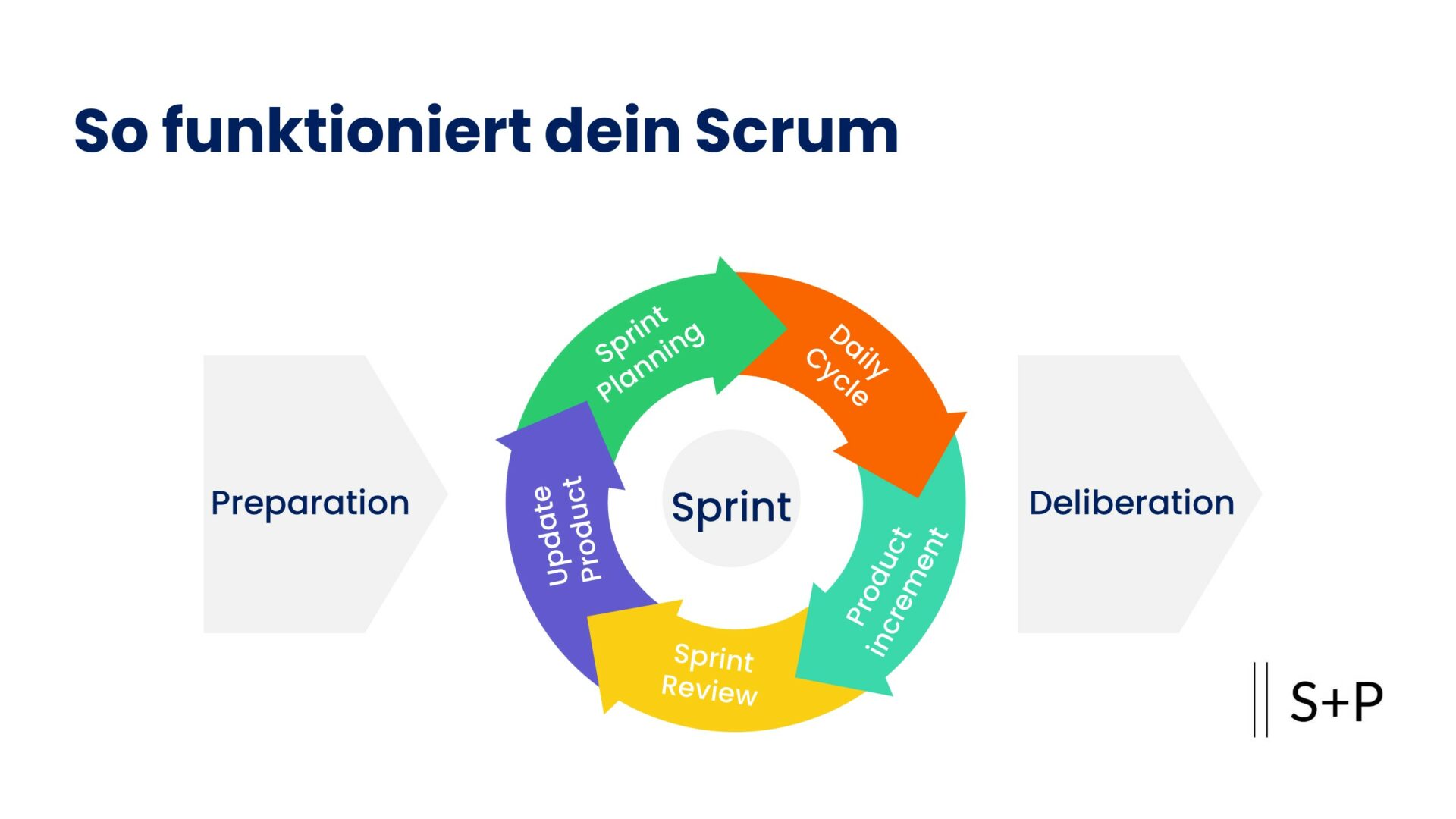
So funktioniert dein Scrum. Scrum zählt zu den bekanntesten agilen Ansätzen. Der Scrum Guide von Sutherland und Schwaber beschreibt das Projektmanagement mit Scrum. Jedes Element von Scrum dient einem bestimmten Zweck, der für den Gesamtwert und die mit Scrum erzielten Ergebnisse wesentlich ist. Der Scrum benötigt einen Scrum Master der ein Projektmanagement-Umfeld fördert, in dem
ein Product Owner die Arbeit für ein komplexes Problem in einen Product Backlog einsortiert;
das Scrum Team innerhalb eines Sprints ein wertvolles Increment erarbeitet;
das Scrum Team und dessen Stakeholder die Ergebnisse überprüfen und für den nächsten Sprint anpassen.
Scrum schafft maximale Flexiblität. Es können verschiedene Prozesse, Techniken und Methoden eingesetzt werden. Mit Scrum können bestehende Praktiken weiterentwickelt werden oder sogar überflüssig werden.
Und so funktioniert dein Scrum in der Praxis. Scrum basiert auf Lessons Learned und Lean Thinking. Lessons Learned bedeutet, dass Wissen aus Erfahrung gewonnen wird und Entscheidungen auf der Grundlage neu erlernten Wissens besser getroffen werden können. Lean Thinking fokussiert sich auf das Wesentliche und reduziert die Komplexität.
Scrum sieht keine Projekte vor. Scrum kann mit der Projektbrille so interpretiert werden: Jeder Sprint ist ein in sich abgeschlossenes kleines Projekt. Das Scrum-Team verpflichtet sich, seine Ziele zu erreichen und sich gegenseitig zu unterstützen. Es gibt Anforderungen, eine Planung, das Arbeiten im Sprint, die Begutachtung der Ergebnisse und ein gemeinsames “Lessons-Learned”.
Der primäre Fokus des Scrum Teams liegt auf der Arbeit mit Sprints. Das Scrum-Team und seine Stakeholder werden offen über die Arbeit und die Herausforderungen informiert. Die Mitglieder des Scrum Teams respektieren sich gegenseitig als fähige, unabhängige Projektmitglieder. Die Scrum Team Mitglieder haben den Mut, das Richtige zu tun und an schwierigen Problemen zu arbeiten.
Die erfolgreiche Anwendung von Scrum erfordert von den Mitarbeitern die Beachtung der folgenden 5 Werte: Commitment, Fokus, Offenheit, Respekt und Mut.
Der zentrale Bestandteil von Scrum ist ein kleines Team von Mitarbeitern, dem sog. Scrum Team. Das Scrum Team besteht aus einem Scrum Master, einem Product Owner und einem Developer.
Innerhalb eines Scrum Teams gibt es keine Hierarchien. Ein Scrum Team ist eine geschlossene Einheit von Fachleuten, die sich auf das Produkt‐Ziel fokussieren. Scrum Teams sind interdisziplinär. Die Mitglieder verfügen über alle Fähigkeiten, die erforderlich sind, um in jedem Sprint einen added value zu schaffen. Sie managen sich selbst. Das heißt sie entscheiden intern, wer was wann und wie macht.
Das Scrum Team ist klein. Damit bleibt es agil. Es ist aber auch groß genug, um innerhalb eines Sprints wichtige Arbeiten fertigstellen zu können. Die optimale Größe eines Scrum Teams sind üblicherweise 10 oder weniger Personen.
So funktioniert dein Scrum: Die Praxis zeigt, dass kleinere Teams besser kommunizieren und produktiver sind. Wenn Scrum-Teams zu groß werden, sollten sie in mehrere zusammenhängende Scrum-Teams aufgeteilt werden.
Das Scrum Team ist für alle produktbezogenen Aktivitäten verantwortlich, von der Zusammenarbeit mit den Stakeholdern, Verifikation, Wartung, Betrieb, Experimentieren, Forschung und Entwicklung. Das gesamte Scrum-Team ist dafür verantwortlich, in jedem Sprint ein nützliches Projektergebnis zu erreichen.
#3 Was ist ein Developer im Scrum Team?
Developer sind Mitarbeiter im Scrum Team, die im Sprint ein nutzbares Increment schaffen. Dies erfordert spezifische Fähigkeiten des Developers. Der Developer ist verantwortlich für
einen Plan für den Sprint zu erstellen, das Sprint Backlog;
die Einhaltung der Qualität, also der Definition of Done;
die täglich Anpassung des Plans zur Erreichung des Sprint‐Ziels;
So funktioniert dein Scrum: Rolle des Developers und die Definition of Done
Im Gespräch mit dem Product Owne wählen die Developer Einträge aus dem Product Backlog aus, die in den aktuellen Sprint aufgenommen werden sollen. Das Scrum Team kann diese Einträge während dieses Prozesses verfeinern, was Verständnis und Vertrauen erhöht. Die Auswahl, wie viel innerhalb eines Sprints abgeschlossen werden kann, kann eine Herausforderung darstellen. Je mehr die Developer über ihre bisherige Leistung, ihre zukünftige Kapazität und ihre Definition of Done wissen, desto sicherer werden sie in ihren Sprint‐Vorhersagen sein.
Für jeden ausgewählten Product‐Backlog‐Eintrag planen die Developer die notwendige Arbeit, um ein Increment zu erstellen, das der Definition of Done entspricht. Dies geschieht durch die Zerlegung von Product‐Backlogs in kleinere Arbeitseinheiten mit einer Dauer von einem Tag oder weniger. Wie dies geschieht, liegt im Ermessen des Developers.
#4 Was ist ein Product Owner?
Bestandteil von Scrum ist ein kleines Team von Mitarbeitern. Diese bilden das Scrum Team. Das Scrum Team besteht aus einem Scrum Master, einem Developer und einem Product Owner.
Der Product Owner ist ergebnisverantwortlich für den added value des Produkts, der sich aus der Arbeit des Scrum Teams ergibt. Der Product Owner ist für ein effektives Product Backlog‐Management verantwortlich. Damit dein Scrum in der Praxis funktioniert sind folgende Aufgaben für den Product Owner verbindlich festzulegen:
Entwickeln der Produkt‐Ziele;
Erstellen der Product‐Backlog‐Einträge und deren Kommunikation;
Festlegen der Reihenfolge für die Product‐Backlog‐Einträge;
Sicherstellen, dass das Product Backlog transparent, sichtbar und verstanden ist.
So funktioniert dein Scrum: Product Owner und Product Backlog-Management
Damit der Product Owner Erfolg haben kann, müssen alle Beteiligten seine Entscheidungen im Rahmen des Product Backlog Managements respektieren. Diese Entscheidungen können den Inhalt oder die Reihenfolge des Product Backlogs betreffen. Auch werden die Entscheidungen des Product Owners beim Sprint Review, also der Überprüfung des Increments, sichtbar.
Der Product Owner ist eine Person, kein Gremium. Der Product Owner kann die Anforderungen der Stakeholder im Product Backlog berücksichtigen.
Diejenigen, die das Product Backlog ändern möchten, können dies tun. Sie haben die Möglichkeit ihre Vorschläge direkt an den Product Owner zu adressieren.
#5 Was ist ein Scrum Master?
Der Scrum Master ist verantwortlich für die Effektivität des Scrum Teams. Er versetzt das Scrum Team in die Lage, seine Arbeitsweise zu verbessern. Scrum Master sind echte Führungskräfte. Sie unterstützen das Scrum Team und die Scrum Organisation.
Damit dein Scrum funktioniert sind folgende Schnittstellen zwischen Scrum Master und Scrum Team verbindlich zu regeln:
Coaching der Teammitglieder im Selbstmanagement und in der interdisziplinären Zusammenarbeit;
Unterstützung des Scrum Teams mit mehr Fokussierung bei der Schaffung hochwertiger Increments,
Unterstützung bei der Einhaltung der Definition of Done;
Beseitigung von Hindernissen (impediments) für den Fortschritt des Scrum Teams.
So funktioniert dein Scrum: Scrum Master und Scrum Events
Der Scrum Master stellt sicher, dass alle Events von Scrum stattfinden. Jedes Event in Scrum ist eine Gelegenheit, Scrum‐Artefakte zu überprüfen und anzupassen. Diese Events sind darauf ausgelegt, die erforderliche Transparenz zu ermöglichen.
Der Scrum Master versucht die Scrum Events positiv und produktiv zu gestalten und stellt sicher, daß diese innerhalb der Timebox bleiben.
Events werden in Scrum verwendet, um Regelmäßigkeit zu schaffen und die Notwendigkeit von Meetings, die in Scrum nicht definiert sind, zu minimieren. Optimal ist die Durchführung aller Events zur selben Zeit und am selben Ort. Das reduziert die Komplexität bei der Planung der Events.
Schnittstelle Scrum Master und Product Owner
Der Scrum Master unterstützt den Product Owner auf unterschiedliche Weise. Er hilft dem Product Owner bei der Suche nach Techniken zur effektiven Definition des Produkt‐Ziels und zum Product‐Backlog‐Management. Der Scrum Master schafft im Scrum Team ein gemeinsames Verständnis über klare und präzise Product‐Backlog‐Einträge.
Der Scrum Master fördert die die Zusammenarbeit mit Stakeholder. Der Scrum Mastern dient der Organisation auf unterschiedliche Weise. Er führt, schult und coacht bei der Einführung von Scrum.
Er unterstützt die Mitarbeiter und die Stakeholder bei der Umsetzung von Scrum, auch für komplexe Arbeiten. Er beseitigt die Barrieren zwischen Stakeholdern und dem Scrum Team.
#6 So funktioniert dein Scrum: Artefakte von Scrum und die Definition of Done
Die Artefakte von Scrum repräsentieren das Arbeitsergebnis, also den Outcome. Artefakte sollen die Transparenz von Schlüsselinformationen maximieren.
Jedes Artefakt beinhaltet ein Commitment, um sicherzustellen, dass Informationen bereitgestellt werden, welche den Fortschritt messbar machen. Damit dein Scrum in der Praxis funktioniert sind folgende Regelungen zu treffen:
Für das Product Backlog ist es das Produkt‐Ziel.
Für das Sprint Backlog ist es das Sprint‐Ziel.
Für das Increment ist es die Definition of Done.
Die Definition of Done beschreibt den Soll-Zustand des Increments, wenn es die für das Produkt erforderlichen Qualitätsmaßnahmen erfüllt. In dem Moment, in dem ein Product‐Backlog die Definition of Done erfüllt, wird ein Increment geschaffen.
Die Definition of Done schafft Transparenz. Alle am Scrum beteiligten Personen erhalten ein gemeinsames Verständnis darüber, welche Arbeiten als Teil des Increments abgeschlossen wurden.
Wenn ein Product‐Backlog nicht der Definition of Done entspricht, kann es weder freigegeben noch beim Sprint Review präsentiert werden. Die Developer müssen sich an die Definition of Done halten. Wenn mehrere Scrum Teams an einem Produkt zusammenarbeiten, müssen sie eine gemeinsame Definition of Done definieren.
#7 Was ist Sprint Planning?
Das Sprint Planning setzt die Eckpunkte für den Sprint fest. Es werden die für den Sprint auszuführenden Arbeiten beschrieben.
Der Sprint Plan wird durch das gesamte Scrum Team erstellt.
Der Product Owner stellt sicher, dass die Teilnehmer beim Sprint Planning die wichtigsten Product‐Backlog‐Einträge besprechen. Es wird die Zuordnung zum Produkt‐Ziel festgelegt.
Das Scrum Team kann auch andere Stakeholder zur Teilnahme am Sprint Planning einladen.
Damit dein Scrum in der Praxis funktioniert sind in im Sprint Planning folgende Themen zu bearbeiten:
1. Warum ist dieser Sprint wertvoll?
Der Product Owner beschreibt, wie im aktuellen Sprint der Wert und Nutzen des Produkts gesteigert werden kann. Das Scrum Team definiert dann gemeinsam das Sprint‐Ziel.
Das Sprint‐Ziel muss vor dem Ende des Sprint Plannings feststehen.
2. Was kann in diesem Sprint als Done erreicht werden?
Im Sprint Planning Gespräch wählen die Developer Einträge aus dem Product Backlog aus, die in den aktuellen Sprint aufgenommen werden sollen.
Das Scrum Team kann diese Einträge während des Sprint Plannings verfeinern. Das erhöht das Verständnis und das Vertrauen für den Sprint.
Wie viel innerhalb eines Sprints abgeschlossen werden kann, kann eine Herausforderung darstellen. Je mehr die Developer über die Definition of Done wissen, desto sicherer werden sie in ihren Sprint‐Vorhersagen sein.
3. Wie wird die Arbeit im Sprint erledigt?
Das Sprint Planning wird auf maximal acht Stunden für einen einmonatigen Sprint angesetzt. Bei kürzeren Sprints ist das Event selbstverständlich kürzer.
Für jeden ausgewählten Product‐Backlog planen die Developer die notwendige Arbeit. Was muss getan werden, um ein Increment zu erstellen, das der Definition of Done entspricht?
Dies geschieht durch Zerlegung der Product‐Backlogs in kleinere Arbeitseinheiten von einem Tag oder weniger. Wie dies geschieht, liegt im alleinigen Ermessen der Developer.
Das Sprint‐Ziel, die für den Sprint ausgewählten Product‐Backlogs und der Zeitplan für deren Lieferung werden als Sprint Backlog bezeichnet.
Who is liable for poor compliance?In BaFin’s April 2021 technical article, key points regarding liability in the event of a compliance violation were regulated. With S+P Compliance News you will receive the following BaFin interpretations:
#1 Does a board member have to fulfill all compliance duties himself?
#2 Who is the „legal representative“ and who is the „elected representative“?
#3 Liability in the event of a breach of obligations under capital market law
#4 When is someone an „other designee“ of the board?
#5 Who is liable if something goes wrong?
#6 Who is liable in the event of infringement by the employee in charge?
#7 Who is liable in the event of delegation fault?
#8 5-Step Check for the Discharge of the Management Board
The 5 Step Check gives you confidence in your discharge audit as a board member. If the board succeeds in exonerating itself in five steps, it does not have to pay a fine.
At Level 1, he must carefully select employees and supervisors.
Secondly, he is obliged to organise and distribute tasks properly. This also results in the obligation to provide for substitution plans in order to be able to absorb absences due to illness or holidays.
Thirdly, employees must be adequately instructed and informed about their tasks and duties.
Fourth: The management board must adequately supervise and control the employee – for example, through spot checks. Inexperienced or unreliable employees must be supervised more intensively than those who have already proven their reliability.
Finally, at level 5, there is an obligation to intervene against infringements.
#2 Who is the „legal representative“ and who is the „elected representative“?
The „legal representative“ of a company refers to the board of directors, whereas the „authorized representative“ is usually the employee in charge.
Section 9 of the German Administrative Offences Act (OWiG) regulates acting on behalf of another person.
(1) Does anyone
as a representative body of a legal person or as a member of such a body, a law (…) shall also apply to the representative (…).
(2) Where the owner of an establishment or any other person authorised to do so
appointed to manage all or part of the undertaking, or
expressly commissioned to perform tasks on his own responsibility, (…) a law shall also apply to the commissioner (…).
The management board may delegate its duties under capital market law to a representative. In legal terms, this means that an authorized representative can perform the duties to be fulfilled in place of the actual addressee of the standard.
The law specifies constellations of representation that lead to a transfer of duties from the legal representative of the company to a representative. If the representative enters into the duties of the executive board, this is referred to as a transfer of norm addressee status. Thus, the employee in charge himself becomes the norm addressee, i.e. the addressee of the statutory provision.
#4 When is someone an „other designee“ of the board?
The „other appointee“ must be specifically appointed by the board and must have a clear understanding of the nature and scope of the task assigned to him or her.
The background to this is that the „other agent“ should not unintentionally „slip“ into the position of the owner of the business and inadvertently become the subject of liability in the event of breaches of the standard.
Like an operational manager, the „other appointee“ must also have autonomy of action when carrying out the assigned tasks. The management board may also distribute its duties among several employees.
#5 Who is liable if something goes wrong with compliance?
Section 9 (2) OWiG merely makes the substitutes additional addressees of the standard. This means that BaFin can continue to take action against the management board in the event of an infringement by the representative.
The management board remains solely responsible if it has not delegated its duties in accordance with the law.
#6 Who is liable in the event of a breach of compliance by the employee in charge?
However, the purpose of the assignment is precisely to relieve the legal representative of the proprietor. He cannot therefore be required to prevent every infringement by the representative.
If he takes the necessary supervisory measures in an appropriate manner, he is generally not at fault in the event of a violation by the representative. Therefore, there is no sanction against the management board.
#7 Who is liable in the event of delegation fault?
In the event of a delegation offence by the Management Board or an infringement by the substitute, BaFin may impose an association fine in accordance with section 30(4) OWiG.
The fine is then assessed against the company itself. In this case, prosecution of the management persons is then dispensed with.
#8 5-Step Check for the Discharge of the Management Board
In accordance with § 130 OWiG, there is no liability if an infringement has been committed but the company could not have prevented it or made it more difficult through proper supervision.
Because no compliance organization, no matter how perfect, can prevent agents or other employees from ever violating applicable law. If a violation occurs, the company must demonstrate that it has taken the right measures and that the prohibited conduct of the agent is therefore not attributable to the management board.
Assuming that the management board cannot prove the 5-step compliance check. Is there still a possibility of mitigating the fine?
It is at the discretion of the prosecuting authorities to discontinue administrative offence proceedings. BaFin takes into account, for example, whether the company concerned has improved its compliance organisation since the last infringement.
And if internal processes have been changed in such a way that it will be significantly more difficult to commit comparable violations in the future. If, at its due discretion, the proceedings cannot be discontinued, BaFin may at least take into account progress made in establishing or improving the compliance organisation in order to reduce the fine.
However, the amount of the fine must be such as to constitute a deterrent to the undertaking which has acted unlawfully.
Is there a benefit to reporting the violation to BaFin yourself?
In the case of a voluntary disclosure, the fine can be reduced by up to 30 percent. This assumes that BaFin was not previously aware of the facts reported.
Obligation to notify outsourcing at securities institutions: What is to be observed? The auditor must report separately on outsourcing of material activities and processes, taking into account the requirements set out in section 40 of the Securities Institutions Act. In doing so, a statement must be made as to whether the classification of outsourcing as material or immaterial is comprehensible from the point of view of risk, type, scope and complexity.
Obligation to notify outsourcing: BaFin requirements for securities institutions
§Section 64 regulates the notification requirements for all securities institutions.
(1) A securities institution shall notify the Bundesanstalt and the Deutsche Bundesbank without delay:
13.
The intention of a material outsourcing, the execution of the outsourcing as well as material changes and serious incidents in the context of existing material outsourcing.
Obligation to notify outsourcing at securities institutions + The following regulations apply to the outsourcing notification pursuant to § 64 paragraph 1 number 13 of the Securities Institutions Act:
Notifications of outsourcing pursuant to section 64(1) number 13 of the Securities Institutions Act shall be submitted for the first time as of the date on which the Bundesanstalt makes available the electronic submission procedure provided for such submission.
The list of outsourcing matters specified by the Federal Financial Supervisory Authority in the electronic submission procedure shall be deemed to be a material outsourcing for which the intention, execution, material changes and the occurrence of serious incidents must be reported.
Provisions of § 40 WpIG on outsourcing at securities institutions
§40 WpIG regulates the outsourcing of activities and processes.
Depending on the type, scope, complexity and risk level of an outsourcing of critical and important operational tasks within the meaning of Article 30(1) of Delegated Regulation (EU) 2017/565 (material outsourcing), a securities institution must take adequate precautions to avoid excessive additional risks.
Outsourcing shall not impair the regularity of those transactions and services or the business organisation. In particular, the investment institution shall maintain adequate and effective risk management.
An investment institution shall keep an outsourcing register as part of its risk management. All material and non-material outsourcing must be recorded in this register.
The Ordinance on the Audit of the Annual Financial Statements of Securities Institutions and on the Reports to be Prepared (Wertpapierinstituts-Prüfungsberichtsverordnung – WpI-PrüfbV) regulates the following in this regard:
Outsourced material activities and processes shall be specified and delimited in a comprehensible manner, also in connection with the designations made in Annex 2. The data overview for small and medium-sized securities institutions that have outsourced areas to another company must include the following information:
# Outsourcing company including address
# CN ident number
# Outsourced activities and processes
# Status (planned on/ carried out on/ completed on)
# date of outsourcing
# Remarks in particular on further outsourcing
Articles 30 to 32 lead to further obligations for outsourcing of investment institutions
Articles 30 to 32 of Delegated Regulation (EU) 2017/565 contain more detailed provisions on material outsourcing. If, in the case of material outsourcing, an outsourcing company has its registered office in a third country, it must be contractually ensured that the outsourcing company designates a domestic authorised representative to whom notifications and notifications can be effected by the Bundesanstalt.
The Federal Financial Supervisory Authority may, in individual cases, issue orders to a securities institution and also directly to an outsourcing company to which material outsourcing has taken place, which are appropriate and necessary,
1. to prevent or stop breaches of supervisory regulations,
2.to eliminate any impairment of the Federal Financial Supervisory Authority’s auditing rights or control possibilities, or
3.to prevent or remedy malpractices at the securities institution or outsourcing company which may jeopardise the security of the assets entrusted to the securities institution or impair the orderly performance of the securities services, ancillary securities services or ancillary transactions.
Further regulations of the IFD to be observed pursuant to Section 40 WpIG + Obligation to notify outsourcing at securities institutions
The IFD regulate in Section 2 decisive and important operational tasks in Article 30 as follows:
For the purposes of the first subparagraph of Article 16(5) of Directive 2014/65/EU, an operational task shall be considered crucial or important if its insufficient performance or non-performance would materially affect the investment firm’s continuous compliance with the conditions and obligations of authorisation or other obligations under Directive 2014/65/EU, its financial performance or the soundness or continuity of its investment services and activities.
Without affecting the status of other duties, the following duties shall not be considered crucial or important for the purposes of paragraph 1:
(a) advisory and other services provided to the investment firm which are not part of its investment business, including legal advice, staff training, billing and security of premises and staff;
(b) the purchase of standardised services, including market information services and price data.
Further provisions are made in Articles 31 and 32.
Article 31 provides for the outsourcing of critical or important operational functions.
Investment firms that outsource key or important operational functions shall remain fully responsible for the performance of all their obligations under Directive 2014/64/EU and shall comply with the following conditions:
(a) the outsourcing does not involve a delegation of senior management tasks;
(b) the relationship and obligations of the investment firm towards its clients under Directive 2014/65/EU remain unchanged;
(c) the conditions with which an investment firm must comply in order to be authorised in accordance with Article 5 of Directive 2014/65/EU and to maintain that authorisation remain fulfilled; and
(d) the other conditions under which the investment firm was granted authorisation have not lapsed and have not changed.
Professional onboarding and offboarding upon conclusion, execution or termination of the outsourcing agreement
Investment firms shall exercise due professionalism and care when entering into, executing or terminating an agreement to outsource critical or important operational functions to a service provider and shall take all necessary measures to ensure that:
(a) the service provider has the suitability, capacity, sufficient resources and appropriate organisational structures to perform the outsourced functions, as well as all licences required by law, to perform the outsourced functions in a reliable and professional manner;
(b) the service provider performs the outsourced services effectively and in accordance with applicable laws, regulations and administrative provisions and, to that end, the investment firm has established methods and procedures for evaluating the performance of the service provider and for the ongoing review of the services provided by the service provider;
(c) the service provider shall properly monitor the performance of the outsourced functions and adequately manage the risks associated with the outsourcing; and
(d) appropriate measures are taken where there is doubt that the service provider may not be performing its functions effectively and in compliance with applicable laws, regulations and administrative provisions;
(e) the investment firm shall effectively monitor the outsourced functions or services and manage the risks associated with the outsourcing and, to that end, it shall continue to have the necessary expertise and resources to effectively monitor the outsourced functions and manage those risks;
(f) the service provider has brought to the attention of the investment firm any development that could materially affect its ability to perform the outsourced functions effectively and in compliance with applicable laws, regulations and administrative provisions;
(g) the investment firm is able to terminate the outsourcing arrangement with immediate effect, if necessary, when this is in the interest of its clients, without affecting the continuity and quality of the services provided to its clients;
(h) the service provider cooperates with the competent authorities of the investment firm in relation to the outsourced functions;
(i) the investment firm, its auditors and the relevant competent authorities have effective access to data related to the outsourced functions and to the premises of the service provider where necessary for the purposes of effective supervision in accordance with this Article, and the competent authorities may make use of those access rights;
(j) the service provider shall protect all confidential information concerning the investment firm and its clients
(k) the investment firm and the service provider have established and implemented on a permanent basis a contingency plan that ensures the retention of data in the event of a system failure and provides for regular testing of backup systems, should this be necessary in view of the outsourced function, service or activity
(l) the investment firm has ensured that the continuity and quality of the outsourced functions or services are maintained in the event of termination of the outsourcing by transferring the performance of the outsourced functions or services to another third party or by the investment firm itself performing those outsourced functions or services.
Minimum requirements for the written outsourcing agreement + Obligation to notify outsourcing in the case of investment institutions
The relevant rights and obligations of the investment firm and the service provider shall be clearly allocated in a written agreement. In particular, the investment firm shall retain its rights of instruction and termination, its rights to information and its rights of inspection and access to books and business premises. The agreement shall ensure that any outsourcing by the service provider may only take place with the written consent of the investment firm.
Where the investment firm and the service provider belong to the same group, the investment firm may take into account the extent to which it controls or can influence the actions of the service provider for the purposes of complying with this Article and Article 32.
The investment firm shall provide the competent authorities, at their request, with all the information necessary to monitor compliance of the performance of the delegated functions with the requirements of Directive 2014/65/EU and its implementing measures.
Article 32 sets out requirements when using service providers established in a third country
#1 Investment firms that outsource functions related to the management of client portfolios to a third country service provider shall, in addition to the requirements of Article 31, ensure that the following conditions are met:
(a) the service provider is authorised or registered to provide that service in its home country and is effectively supervised by a competent authority in that third country;
(b) there is an appropriate cooperation agreement between the competent authority of the investment firm and the supervisory authority of the service provider.
#2 The cooperation arrangement referred to in point (b) of paragraph 1 shall ensure that the competent authorities responsible for the investment firm are at least able to:
(a) obtain, on request, the information necessary for the performance of their supervisory duties under Directive 2014/65/EU and Regulation (EU) No 600/2014;
(b) have access to documents held in the third country which are relevant for the exercise of their supervisory duties;
(c) obtain information from the supervisory authority in the third country as soon as possible in order to investigate apparent breaches of the requirements of Directive 2014/65/EU and its implementing measures and Regulation (EU) No 600/2014;
(d) in the event of a breach of the requirements of Directive 2014/65/EU and its implementing measures and relevant national law, to address enforcement in cooperation in accordance with national and international laws applicable to the third country supervisory authority and the competent authorities in the EU.
#3 Competent authorities shall publish on their website a list of supervisory authorities in third countries with which they have concluded a cooperation arrangement referred to in point (b) of paragraph 1.
Competent authorities shall update cooperation agreements concluded before the date of entry into force of this Regulation within six months of the date of entry into force of this Regulation.
You have been newly appointed as an outsourcing controller? With the seminar Outsourcing Controlling according to AT 9 MaRisk you will learn the following skills for this new task:
#1 Requirements of the new EBA guidelines, MaRisk, German Banking Act (KWG) and the Securities Institutions Act (WpIG) for the outsourcing officer
#2 New requirements for the outsourcing of important control areas
#3 Obligation to notify outsourcing according to FISG and WpIG
#4 Risk Assessment Performing Outsourcing Management in an Audit-Proof Manner
#5 Limiting Liability Risks – New Reporting Duties of the Outsourcing Agent
#6 Knowing monitoring and control obligations as an outsourcing officer
#7 Implementation of the EBA guidelines on outsourcing and ITC
#8 Obligation to notify outsourcing at securities institutions: What must be observed?
Target Group – Seminar Outsourcing Controlling
Board members and managing directors at banks, financial service providers, investment and fund companies, leasing and factoring companies
Managers and specialists from the areas of outsourcing management, risk controlling, IT compliance, compliance officers and internal auditors
Your benefits – seminar on outsourcing controlling
Tasks and duties of the outsourcing officer
Risk analysis for outsourcing: Knowing the „red lines
Ongoing monitoring duties of the outsourcing manager
Obligation to notify outsourcing according to FISG and WpIG
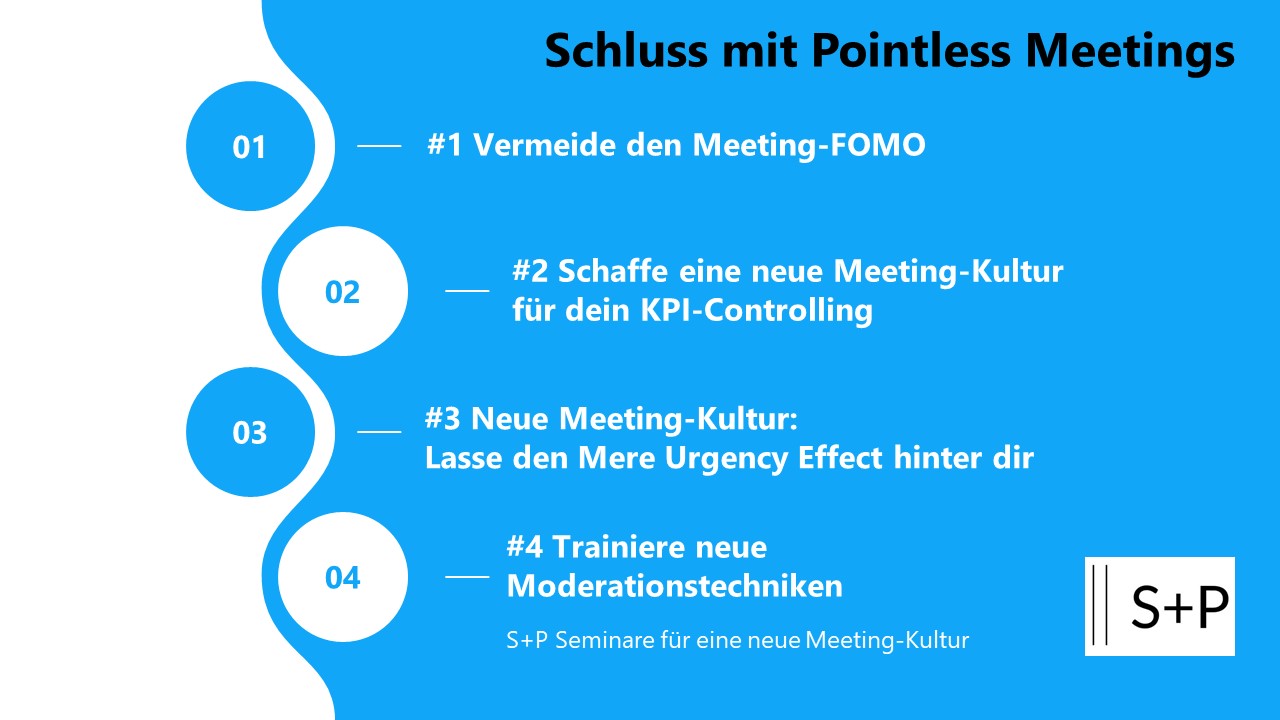
Schluss mit Pointless Meetings: Trainiere neue Moderationstechniken. Warum fühlen sich schlechte Besprechungen so unvermeidbar an? Haben wir uns wirklich damit abgefunden, in sinnlosen Besprechungen zu sitzen – oder schlimmer noch, diese leiten zu müssen? Das sollten wir nicht. Hier findest du die häufigsten Gründe, warum du jeden Tag in einer Besprechung sitzt und wie du deinen Terminplan in den Griff bekommen kannst:
#1 FOMO:
Allzu oft machst du dir Sorgen, dass deine Kollegen dich verurteilen oder schlimmer noch, dich vergessen, wenn du nicht jede Einladung annimmst. Anstatt „ja“ zu sagen, zeige deinen Kollegen Wert und Engagement außerhalb von Meetings. Ermutige dein Team, dasselbe zu tun.
#2 Meeting-Amnesie:
Hast du das Gefühl, dass du immer wieder dieselbe Besprechung abhältst? Das könnte der Fall sein. Mache es dir zur Routine, Notizen zu machen und diese Zusammenfassungen mit den Teilnehmern zu teilen. Wenn du leicht zugängliche Zusammenfassungen deiner Besprechungen aufbewahrst, vermeidest du Wiederholungen.
#3 Mangelnde Accountability:
Wenn du deine Besprechung nützt, um zu überprüfen, ob die Arbeit tatsächlich erledigt wird, solltest du deinen Kollegen vorher mitteilen, dass du die Besprechung absagen wirst und sich alle die Zeit sparen, wenn sie ihre Fristen vor der vereinbarten Zeit schaffen.
Schluss mit Pointless Meetings: Trainiere neue Moderationstechniken und baue dir eine neue Meeting-Kultur auf
Einer der häufigsten Gründe, warum wir an zu vielen Meetings teilnehmen, ist Meeting-Fomo.
Meeting-FOMO steht für Fear of Missing Out. Als Meeting-Teilnehmer machen wir uns Sorgen, dass unsere Kollegen uns verurteilen, wenn wir nicht jede Einladung annehmen.
Der ideale Arbeitnehmer nimmt an allen Meetings teil und folglich auch an zu vielen Meetings.
Vorgesetzte sehen oftmals Facetime als Ersatz für Engagement verwenden oder wenn sie es versäumen, die Meinung abwesender Mitarbeiter in Meetings zu vertreten.
Mitarbeiter können die FOMO-Angst überwinden, indem sie ihren Wert und ihr Engagement außerhalb von Besprechungen demonstrieren. Sie leisten dann ihren Beitrag vor der Besprechung und müssen nicht zwingend am Meeting teilnehmen.
Vorgesetzte sollten ihr Führungsverhalten diesbezüglich anpassen. Facetime ist nicht der Ersatz für Engagement. Der Fokus sollte verstärkt auf den Arbeitsergebnissen liegen.
Die FOMO-Angst kann auch die Organisatoren betreffen. Dies führt dann zu übermäßig aufgeblähten Einladungslisten.
Organisatoren können die FOMO-Angst leicht überwinden. Frage die Teilnehmer vor der Besprechung um Rat hinsichtlich des Teilnehmerkreises und melde dich nach der Besprechung bei den wichtigsten Interessengruppen. Damit stellt du sicher, dass diese die benötigten Informationen erhalten, ohne am gesamten Meeting teilnehmen zu müssen.
Als Moderator des Meetings kannst du ebenfalls einen wichtigen Beitrag leisten, die FOMO-Bedenken der Teilnehmer zu zerstreuen:
Kommuniziere klar, wenn einige Mitarbeiter nicht dabei sind.
Mache deutlich, dass du ihren Rat zu schätzen weißt und du sie nur deshalb nicht auf die Liste gesetzt hast, weil ihre Zeit für andere Prioritäten genutzt werden muss.
Vor allem aber solltest du darauf achten, dass du die Teilnahme an Besprechungen nicht bewusst oder unbewusst als Maßstab für deren Engagement nimmst.
#2 Schaffe eine neue Meeting-Kultur für dein KPI-Controlling
Manchmal werden Besprechungen als Hilfsmittel zur Einhaltung von KPIs eingesetzt. Mit diesem KPI-Controlling soll sichergestellt werden, dass die Teilnehmer ihre Zusagen einhalten.
Ein solcher Termin kann ein wirksamer Motivator sein. Derartige Besprechungen sind im Kern oft unnötig. Die Mitarbeiter berichten lediglich darüber, wie sie das vereinbarte Ziel erreicht oder nicht erreicht haben.
Ein besserer Weg für das laufende Controlling vos KPIs sind regelmäßige Scrum-Meetings. Hier berichtet das Team in einer transparenten und effizienten Struktur. Das Scrum-Board zeigt dem verantwortlichen Manager die KPIs gegliedert nach To Do`s, Doing und Done.
Als Führungskraft solltest du daran denken, welche Opportunitätskosten mit Meetings verbunden sind. Wie viel kostet ein wöchentliches Meeting? Und wie hoch sind die persönlichen Kosten?
#3 Neue Meeting-Kultur: Lasse den Mere Urgency Effect hinter dir
Wenn wir die wichtigen Themen nicht anpacken können oder wollen, dann kann die Erledigung scheinbar dringender -aber eigentlich unwichtiger- Aufgaben eine gewisse Erleichterung bringen.
Man spricht hier auch vom Mere Urgency Effect. Wenn wir an Besprechungen teilnehmen, haben wir das Gefühl, etwas erreicht zu haben. Folglich sagen wir diese Meetings nur ungern ab, selbst wenn diese objektiv gesehen nicht so wichtig sind wie unsere anderen Aufgaben.
Die Lösung, um den Mere Urgency Effect zu vermeiden:
Mache die Absage oder die vorzeitige Beendigung von Besprechungen zum Standard. Das gilt insbesondere bei wiederkehrenden Terminen.
Anstatt zu fragen: „Gibt es etwas Neues?“, sage einfach: „Wenn es nichts Neues gibt, sagen wir ab. Dann sparen wir alle eine Stunde.“
Mache es zur Gewohnheit, bei wiederkehrenden Besprechungen zu fragen, ob du das nächste Meeting brauchst.
Dieses Seminar könnte dich zum Thema Neue Meeting-Kultur und agile Führung auch interessieren
Was bedeutet agile Führung? Agilität als Führungskraft ist im Zeitalter der Digitalisierung nicht mehr wegzudenken. Mit dem Seminar New Work: Agilität sicher umsetzen oder der Online Schulung New Work erlernst du innovative Techniken für ein agiles Mindset. Du trainierst die notwendigen Fähigkeiten und Kenntnisse, um Agilität im Team erfolgreich zu etablieren. Diese Skills erwirbst du mit dem Seminar New Work: Agilität sicher umsetzen:
# Remote und agil im Team: Mehr Fokus mit OKRs
# Agilität: Was bedeutet das für Teams und Mitarbeiter?
# Schluss mit Pointless Meetings: Trainiere neue Moderationstechniken
# Golden Circle: Why + How + What
Seminar New Work: Agilität sicher umsetzen oder Online Schulung New Work mit der Produkt-Nr. E18 online buchen: bequem und einfach mit dem Seminarformular online.
Zielgruppe zum Seminar New Work: Agilität sicher umsetzen oder Online Schulung New Work
Team-, Gruppen- und Projektleiter, stellvertretende Führungskräfte, Leiter von Stabstellen.
Key Account Manager, Produktmanager und Assistenten von Vorstand und Geschäftsführung.
Verantwortliche, die Teams, Kollegen und Mitarbeiter führen.
Jeder Teilnehmer erhält mit dem Seminar
S+P Führungs-Cockpit: Aufbau eines agilen Teams
S+P Check: Agile Teams richtig führen
S+P Test „Passt Dein Delegationsverhalten zur agilen Führung?“
S+P-Test „Prüfe Deine Feedback- Fähigkeit auf Agilität“
S+P Leitfaden Company OKRs + Team OKRs + Persönliche OKRs
Sie sehen gerade einen Platzhalterinhalt von Turnstile. Um auf den eigentlichen Inhalt zuzugreifen, klicken Sie auf die Schaltfläche unten. Bitte beachten Sie, dass dabei Daten an Drittanbieter weitergegeben werden.
Sie sehen gerade einen Platzhalterinhalt von Facebook. Um auf den eigentlichen Inhalt zuzugreifen, klicken Sie auf die Schaltfläche unten. Bitte beachten Sie, dass dabei Daten an Drittanbieter weitergegeben werden.
Sie sehen gerade einen Platzhalterinhalt von Instagram. Um auf den eigentlichen Inhalt zuzugreifen, klicken Sie auf die Schaltfläche unten. Bitte beachten Sie, dass dabei Daten an Drittanbieter weitergegeben werden.
Sie sehen gerade einen Platzhalterinhalt von X. Um auf den eigentlichen Inhalt zuzugreifen, klicken Sie auf die Schaltfläche unten. Bitte beachten Sie, dass dabei Daten an Drittanbieter weitergegeben werden.